The database administrator used to be one of the most indispensable people in any technology organisation. They tuned queries at midnight, patched corrupted indexes before dawn, and kept a mental map of every table relationship in a system that had evolved organically over fifteen years. Today, a quiet revolution is underway that is beginning to make parts of that role and the fragile, human-dependent systems it maintains look like relics of a different era.
Autonomous data systems are no longer a research curiosity. They are moving into production environments at some of the world’s largest organisations, promising databases that monitor themselves, heal themselves, and in some cases, redesign themselves. The implications are significant for how enterprises manage data, for the people who work with it, and for the reliability of the digital infrastructure that underpins almost everything.
What “autonomous” actually means.
The word gets overused. In the context of databases, autonomy exists on a spectrum, and most current systems sit somewhere in the middle rather than at the fully self-governing end that vendors sometimes imply.
At the basic level, an autonomous database can monitor its own performance, identify degradation, and take corrective action without human intervention, adjusting memory allocation, rebuilding fragmented indexes, or rerouting queries around a bottleneck. A step further, and the system can predict problems before they occur, using historical performance data to anticipate failures and act preemptively. Further still are systems that can alter their own schema, provisioning, and architecture in response to shifting workload,s not just maintaining themselves, but actively evolving.
Oracle’s Autonomous Database, Google’s Spanner, and Amazon Aurora with its auto-scaling capabilities represent different points on this spectrum. None of them is fully self-governing in every dimension. All of them represent a meaningful departure from the static, manually administered databases of a decade ago.
The problem they are solving
To understand why autonomous data systems matter, it helps to understand the scale of the problem they are responding to.
Modern enterprise databases are not the tidy, well-documented systems that appear in architecture diagrams. They are the accumulated result of years of decisions, migrations, emergency patches, and organisational changes. They contain tables nobody remembers creating, indexes nobody knows are redundant, and queries that run nightly for reasons lost to staff turnover. Keeping these systems performant, available, and consistent is a constant, expensive, and deeply error-prone exercise in human vigilance.
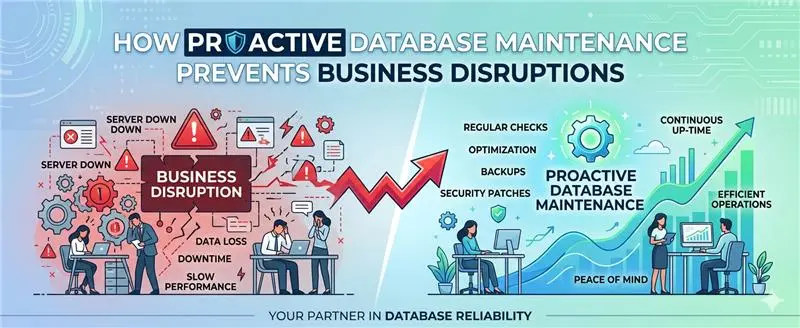
Human error remains the leading cause of unplanned database downtime. A misconfigured parameter, a forgotten index rebuild, a runaway query left unmonitored, these are the kinds of failures that autonomous systems are specifically designed to eliminate. When a database can observe its own behaviour with more granularity and consistency than any human administrator, and respond faster than any on-call engineer, the reliability mathematics change substantially.
Beyond reliability, there is the question of scale. The volume of data organisations are managing has grown faster than the teams tasked with managing it. Autonomous systems are partly a response to that gap, a way to extend the effective reach of data engineering teams without proportionally expanding headcount.
How machine learning changes the equation.
The earlier generation of “self-managing” databases relied on rules. If query latency exceeds threshold X, trigger action Y. These systems were better than nothing, but brittle; they couldn’t anticipate novel failure modes, and they were only as good as the rules their designers had thought to write.
What separates today’s autonomous systems is the application of machine learning to database management. Rather than following predefined rules, these systems build models of normal behaviour and use deviation from that model as a signal. A query that normally runs in 200 milliseconds and suddenly takes 4 seconds isn’t just triggering a latency alert; it’s being evaluated against a learned baseline, cross-referenced with concurrent workload patterns, storage I/O metrics, and network conditions, to identify the most probable cause and the most effective response.
This is the shift from reactive to predictive management. A rules-based system catches a fire once it has started. A machine-learning-driven autonomous system notices the smoke, the subtle pattern of rising latency, unusual lock contention, or storage fragmentation trending in a direction that historical data associates with an impending failure and intervenes before the outage occurs.
Google’s work on query optimisation within Spanner, for instance, uses learned cost models that improve over time as the system accumulates data about how different query plans perform under real-world conditions. The optimiser isn’t static; it gets better the longer it runs.
Self-healing in practice
Self-healing sounds dramatic. In practice, it manifests in ways that are mundane but consequential.
An autonomous database notices that a particular index is no longer being used by the query patterns of the past ninety days, quietly drops it, and reclaims storage. It detects that a tablespace is approaching capacity on a trajectory that will cause failures in seventy-two hours, and automatically provisions additional storage. It identifies that a scheduled batch job is colliding with peak transactional load and reschedules it to run during a quieter window without anyone asking it to.
None of these individual actions is spectacular. Collectively, they represent thousands of small interventions per day that would otherwise require human attention, and they happen continuously, without fatigue, without distraction, and without the three-hour lag that comes from a severity-two alert working its way through an on-call rotation.
The more sophisticated end of self-healing involves schema evolution. Some systems are beginning to experiment with automatic denormalisation, identifying query patterns that suggest a normalised schema is causing unnecessary join complexity, and proposing or, in some cases, automatically implementing a restructured data model. This is a considerably higher-stakes operation, and most production systems still require human approval for schema changes. But the direction of travel is clear.
The security dimension
One of the less-discussed benefits of autonomous data systems is in security. Static databases are notoriously difficult to keep secure. Patches lag, configurations drift, and privilege creep accumulate as access rights are granted and never reviewed.
Autonomous systems can continuously audit their own security posture. They can detect anomalous access patterns, a service account suddenly querying tables it has never touched, a user pulling data volumes several standard deviations above their historical norm and respond in real time by flagging, rate-limiting, or revoking access. This kind of continuous, behavioural security monitoring is something that periodic manual audits simply cannot replicate.
Oracle’s Autonomous Database includes automated threat detection as a core feature, applying machine learning to distinguish normal database activity from patterns consistent with exfiltration, credential compromise, or insider threat. The value isn’t that the system is infallibl,e it isn’t but that the baseline of vigilance is constant rather than episodic.
What this means for the people who manage data
The honest answer is: it’s complicated, and anyone offering simple reassurances probably has something to sell you.
The routine, reactive work of database administration, query tuning, index maintenance, capacity monitoring, and patch scheduling is genuinely under pressure from autonomous systems. These tasks are automatable, and they are being automated. Organisations that once needed large DBA teams to keep complex systems running are finding that smaller teams can manage larger footprints with the right autonomous tooling in place.
But the work that remains and the work that autonomous systems are creating is considerably more demanding. Someone has to design the systems that define what “normal” means for an autonomous database. Someone has to evaluate the restructuring proposals that these systems surface. Someone has to understand the business context that determines whether an automated schema change is safe or catastrophic. Someone has to audit the decisions the autonomous system has been making and catch the cases where the machine learning model has drifted, overfit to a historical pattern, or optimised for the wrong metric.
The DBA role isn’t disappearing. It is shifting from operational execution to strategic oversight, from keeping the lights on to deciding what the lights should illuminate.
The limits of current systems
Autonomous databases are impressive, and the marketing around them often exceeds the reality.
Most current systems are autonomous within a domain; they manage themselves well within the parameters they were designed for, but they do not generalise. An autonomous system that handles operational workloads brilliantly may behave poorly when suddenly asked to support an analytical workload it wasn’t trained on. Self-management is domain-specific, not universal.
There is also the question of trust and auditability. When a database makes ten thousand automatic decisions per day, understanding why a particular decision was made and whether it was the right one becomes genuinely difficult. For regulated industries where data changes must be documented and defensible, the opacity of machine-learning-driven automation creates compliance challenges that the technology has not yet fully resolved.
And the failure modes of autonomous systems can be more complex than those of manually managed ones. A misconfigured rule in a traditional database affects one operation. A miscalibrated machine learning model in an autonomous system can quietly make the wrong decision thousands of times before anyone notices.
Where is this heading
The trajectory is clear, even if the destination is still coming into focus. Databases will become more autonomous over the coming decade, not less. The economics are too compelling, the scale pressures too intense, and the machine learning foundations too mature for this trend to reverse.
The next frontier is cross-system autonomy databases that don’t just manage themselves in isolation, but coordinate across distributed systems, making holistic decisions about where data lives, how it replicates, and how workloads are balanced across an entire data infrastructure. This is the vision behind projects like Google’s globally distributed Spanner and the emerging category of autonomous data platforms that sit above individual databases and orchestrate the whole.
Beyond that lies the integration of large language models into database management systems that can not only monitor and heal, but explain, advise, and converse. The autonomous database that can tell you, in plain language, why it made the decision it made, and what it is planning to do next, is not a science fiction proposition. Early versions of it exist today.
The bottom line
Databases that fix themselves are not a future concept. They are a present reality, deployed at scale, quietly making thousands of decisions per day that keep critical systems running. They are not perfect, and they are not fully autonomous in the sense that science fiction might suggest. But they represent a genuine shift in how data infrastructure is managed from human vigilance to machine intelligence, from reactive firefighting to predictive maintenance.
The organisations that understand this shift and treat autonomous data systems as a strategic capability rather than a vendor feature will build data infrastructure that is more reliable, more secure, and more scalable than anything that pure human administration could sustain at modern data volumes.
The database that fixes itself isn’t replacing the people who understand data. It’s finally freeing them to do the work that actually requires a human.