
Untitled-17

Unlock Your Database’s True Potential

Our Database Performance Monitoring (DPM) services give you complete visibility and control—so your systems run faster, smarter, and without disruption.

Why Choose Our Database Performance Monitoring Services

Cross-Platform Expertise

Deep expertise across SQL Server, Oracle, MySQL, PostgreSQL, and modern NoSQL environments—ensuring consistent performance across your entire data ecosystem.

Proactive Monitoring

We identify and resolve issues before they impact your operations, minimising downtime and maintaining optimal system health.

Security & Compliance First

Monitoring aligned with enterprise-grade data protection standards, ensuring your systems remain secure and compliant at all times.

Actionable, Data-Driven Insights

Gain clear visibility into performance metrics with expert recommendations that drive continuous optimisation.

24/7 Monitoring & Support

Round-the-clock oversight for mission-critical environments, ensuring uninterrupted performance and rapid response when it matters most.

Choosing the Right DPM Tool

Selecting the right Database Performance Monitoring (DPM) tool is critical to maintaining efficiency, scalability, and control. Here are the key questions to guide your decision:

01.

Does it support your database ecosystem?

Ensure the tool is compatible with your technology stack—whether it’s MySQL, PostgreSQL, MongoDB, or a hybrid environment.

02.

Is it intuitive and easy to use?

A clean interface, streamlined setup, and user-friendly dashboards are essential for faster adoption and efficient monitoring.

03.

Does it provide real-time visibility?

Effective monitoring relies on live insights. Choose a solution that delivers up-to-date performance data, not delayed reports.

04.

Can it scale with your business?

As your data grows, your monitoring tool should scale seamlessly—supporting increased workloads without compromising performance.

Who Needs Database Performance Monitoring?

Wondering if Database Performance Monitoring (DPM) is right for you? If your operations depend on data, the answer is almost certainly yes—especially if you:

  • Run high-traffic applications where performance directly impacts user experience
  • Manage large databases with complex, resource-intensive queries
  • Support mission-critical systems that cannot afford downtime
  • Prioritise speed, reliability, and scalable growth across your business
Database performing Monitoring

Optimise Your Database Performance with Confidence

Take control of your database performance with a proactive monitoring approach. We help you detect issues before they escalate, accelerate query performance, and maintain consistent uptime.

With continuous monitoring and expert insights, your databases remain secure, efficient, and fully optimised—so your business can run without interruption.

Frequently Asked Question

What is Database Performance Monitoring?

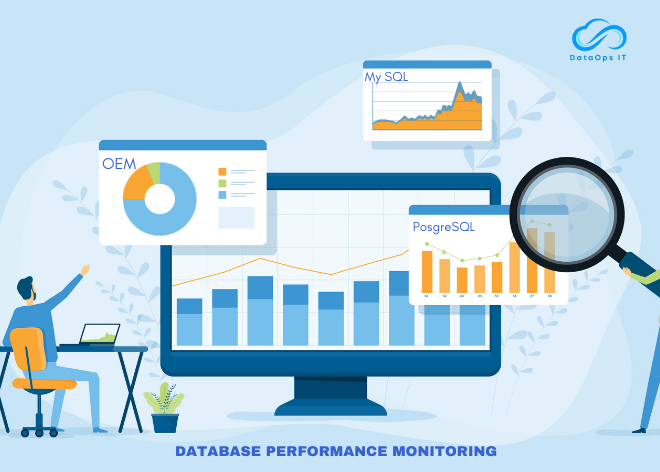
The process of database performance monitoring involves tracking and analyzing key metrics such as query execution time, CPU usage, memory usage, disc I/O, and response times to identify inefficiencies.

Inefficiencies in queries or insufficient resource adequacy may manifest as high CPU usage. Monitoring memory will ensure adequate distribution to avoid slowdowns. Slow disc read/write speeds affect query performance. Query execution time should help identify slow-performing queries. Throughput indicates transaction processing. Inefficient or missing indexes can lead to slow queries. Cache Hit Ratio shows data served from memory.

Famous monitoring tools that provide the performance of a database include Oracle Enterprise Manager, SQL Diagnostic Manager, New Relic, AppDynamics, Prometheus, Grafana, Datadog, and pgAdmin for Oracle, SQL Server, open-source solutions, and cloud-based monitoring.

Monitor tools to analyze the query execution time, identify high response times or resource consumption, review execution plans for inefficiency, and refactor queries or add indexes to improve performance.

Scaling vertically increases server resources, while horizontal scaling distributes database loads across multiple servers or clusters. Sharding reduces load on a single server by splitting up large databases into manageable pieces.

At DataOps IT Ltd, We're Committed To Business

Take the first step towards achieving your business goals by contacting us today. Schedule a consultation with one of our Cloud & Database specialists to discuss your objectives and explore how our innovative solutions can propel.