For many organisations, the database sits quietly at the centre of operations – reliable, familiar, and often overlooked. Yet what once served as a stable foundation can gradually become a constraint. Performance dips, scaling challenges, and rising maintenance costs rarely appear overnight; they accumulate, subtly eroding efficiency and limiting growth.
Recognising when your database is no longer fit for purpose is not simply a technical exercise – it’s a strategic decision. An outdated or misaligned database can hold back innovation, slow decision-making, and ultimately affect your bottom line.
Sluggish Performance Under Growing Demand
One of the earliest and most visible signs is declining performance. Queries that once executed in milliseconds begin to lag, reports take longer to generate, and applications feel less responsive.
This often stems from a mismatch between your current workload and the original design of the database. As data volumes expand and user demands increase, legacy systems struggle to keep pace. While short-term fixes such as indexing or hardware upgrades may provide temporary relief, they rarely address the underlying architectural limitations.
Scaling Feels Like a Constant Battle
Modern businesses demand flexibility – whether it’s handling seasonal spikes, supporting global users, or integrating new services. If scaling your database feels complex, costly, or risky, it’s a strong indication that your current system is no longer aligned with your needs.
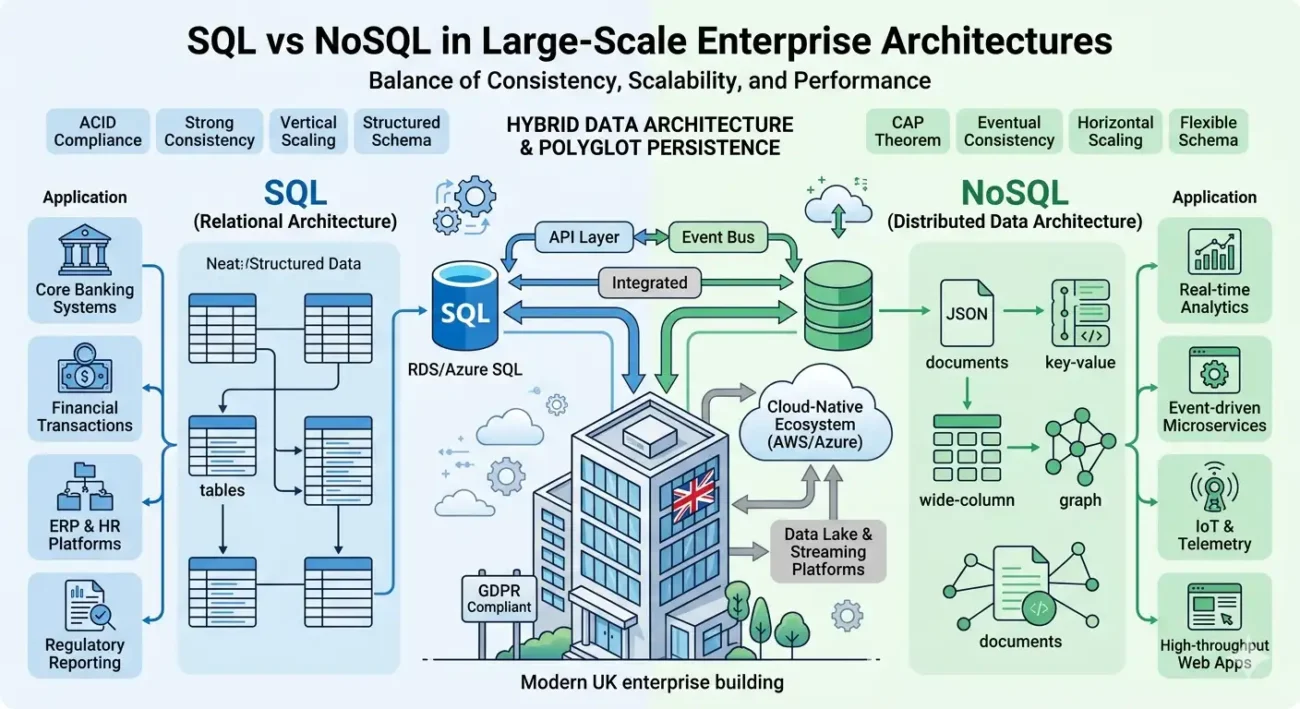
Traditional databases, particularly those designed for on-premise environments, often require vertical scaling (adding more power to a single machine). This approach is not only expensive but also limited. In contrast, modern architectures favour horizontal scaling, enabling seamless expansion across distributed systems.
Rising Operational and Maintenance Costs
An ageing database doesn’t just impact performance—it also affects your budget. Licensing fees, infrastructure costs, and the need for specialised support can escalate over time.
Moreover, legacy systems often demand manual intervention for routine tasks such as backups, patching, and performance tuning. This increases operational overhead and diverts valuable IT resources away from more strategic initiatives. If your team spends more time maintaining the database than leveraging it, the balance is clearly off.
Limited Support for Modern Applications
Today’s applications are data-intensive, real-time, and often distributed across multiple environments. Whether it’s microservices, cloud-native platforms, or advanced analytics, modern workloads require databases that can handle diverse data types and dynamic access patterns.
If your current system struggles to integrate with newer technologies or lacks support for features like real-time processing, flexible schemas, or API-driven access, it may be hindering your ability to innovate.
Data Silos and Integration Challenges
As organisations grow, so does the complexity of their data landscape. If your database makes it difficult to integrate with other systems, share data across teams, or maintain consistency, you’re likely dealing with structural limitations.
Data silos not only reduce efficiency but also compromise decision-making. Without a unified view of information, businesses risk operating on incomplete or outdated insights.
Security and Compliance Concerns
Security standards and regulatory requirements evolve constantly. Older database systems may lack robust encryption, fine-grained access controls, or the ability to meet modern compliance frameworks.
If maintaining compliance feels like a workaround rather than a built-in capability, it’s a clear signal that your database technology is lagging behind current expectations. In an environment where data breaches carry significant financial and reputational risks, this is not an area to compromise.
Difficulty Supporting Real-Time Insights
Speed is no longer a luxury – it’s an expectation. Businesses increasingly rely on real-time analytics to make informed decisions, respond to market changes, and deliver personalised customer experiences.
If your database cannot support real-time data processing or requires complex workarounds to generate timely insights, it is likely limiting your competitive edge.
When Workarounds Become the Norm
Perhaps the most telling sign is the growing reliance on workarounds. When your team consistently builds patches, scripts, or auxiliary systems to compensate for database limitations, it’s a sign that the core system is no longer adequate.
These temporary fixes add complexity, increase risk, and create technical debt that becomes harder to manage over time.
Conclusion: Moving from Constraint to Capability
Upgrading your database is not merely about adopting new technology – it’s about enabling your organisation to operate more efficiently, scale confidently, and innovate without restriction.
The decision should be driven by clear business needs rather than trends. By recognising the signs early and taking a proactive approach, you can transform your database from a bottleneck into a strategic asset.
In a data-driven world, the question is no longer whether your database can cope with today’s demands, but whether it is ready for tomorrow’s opportunities.