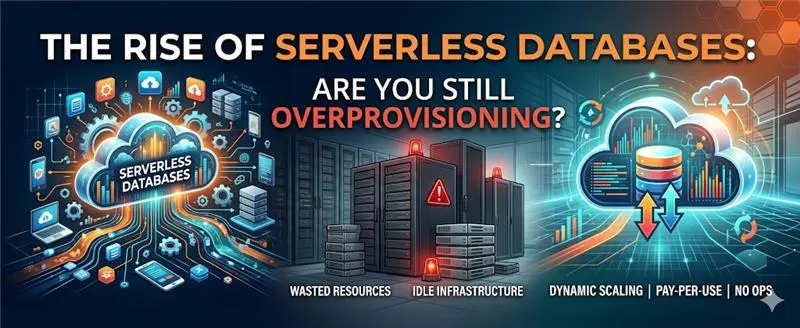
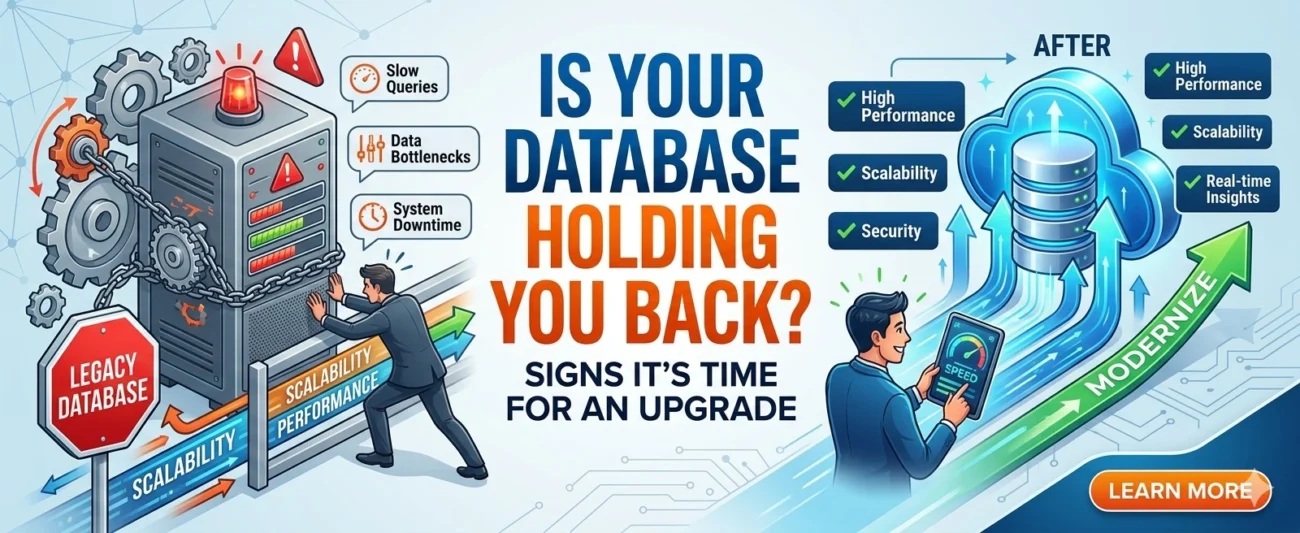
For years, database provisioning has followed a predictable and expensive pattern: estimate peak load, allocate infrastructure accordingly, and hope reality aligns with forecasts. In practice, it rarely does. Most systems sit underutilised for long periods, yet organisations continue paying for idle capacity in the name of resilience.
This is where serverless databases are changing the conversation. By abstracting infrastructure management and introducing fine-grained, demand-based scaling, they challenge one of the most entrenched inefficiencies in modern data architecture: overprovisioning.
What “Serverless” Actually Means in Databases
Despite the name, serverless databases still run on servers, but the responsibility for provisioning, scaling, patching, and maintenance shifts entirely to the cloud provider. Instead of managing instances, teams interact with a logical database endpoint that automatically adjusts resources in response to workload demands.
Key characteristics include:
- Automatic scaling (both up and down, often in real time)
- Consumption-based pricing (pay only for what you use)
- No infrastructure management (no instance sizing, patching, or capacity planning)
- Built-in high availability and fault tolerance
Examples in the market include Aurora Serverless, Azure SQL Serverless, and Google Cloud Spanner’s autoscaling configurations, each with slightly different scaling models, but aligned on the same principle: eliminate idle capacity.
The Overprovisioning Problem
Traditional database architectures are inherently static. Capacity is pre-allocated based on peak expectations, which introduces several inefficiencies:
1. Idle Resources
Most workloads are not consistently at peak. Whether it’s diurnal traffic patterns, seasonal spikes, or unpredictable bursts, databases often operate at a fraction of their allocated capacity.
2. Cost Inflation
Overprovisioning directly translates to higher infrastructure costs. In large-scale environments, this can mean millions spent annually on unused compute and storage.
3. Operational Overhead
Capacity planning becomes a recurring exercise forecasting growth, testing limits, and manually scaling infrastructure. This adds complexity and increases the risk of both over- and under-provisioning.
4. Performance Trade-offs
Ironically, overprovisioning does not always guarantee performance. Misconfigured resources or inefficient scaling strategies can still lead to latency and bottlenecks.
How Serverless Databases Address the Issue
Elasticity Without Intervention
Serverless databases dynamically allocate compute resources based on actual workload demand. Instead of provisioning for peak, systems scale in response to it often within seconds.
Granular Billing Models
Rather than paying for fixed instances, organisations are billed per request, per second of compute, or per transaction unit. This aligns cost directly with usage, eliminating waste.
Reduced Operational Burden
With infrastructure abstracted away, database administrators can focus on optimisation, query performance, and data modelling instead of instance management.
Built-in Resilience
Most serverless offerings include automatic replication, failover, and backups, reducing the need for complex high-availability configurations.
Where Serverless Databases Excel
Variable or Unpredictable Workloads
Applications with fluctuating traffic, such as e-commerce platforms, SaaS products, and event-driven systems, benefit significantly from dynamic scaling.
Development and Testing Environments
Non-production environments often sit idle for long periods. Serverless models ensure you only pay when they are actively used.
Microservices Architectures
Decoupled services with independent scaling requirements align naturally with serverless database models.
Startups and Rapidly Scaling Businesses
Organisations that cannot accurately predict growth can avoid premature infrastructure investment while maintaining performance.
The Trade-offs You Should Not Ignore
Cold Start Latency
Some serverless databases introduce latency when scaling from idle or low-usage states. For latency-sensitive applications, this can be a concern.
Limited Control
Abstraction comes at the cost of fine-grained tuning. Advanced configurations, OS-level optimisations, or specific hardware choices are often unavailable.
Cost at Scale
While serverless is cost-efficient for variable workloads, consistently high workloads may become more expensive than reserved or provisioned instances.
Vendor Lock-in
Serverless offerings are typically tightly coupled with specific cloud providers, making migration more complex.
Rethinking Capacity Planning
Serverless databases do not eliminate the need for architectural thinking; they shift it. Instead of sizing infrastructure, teams must:
- Optimise queries and indexing strategies
- Design for stateless, scalable application patterns
- Monitor usage patterns to avoid unexpected cost spikes
- Implement intelligent caching and data partitioning
The focus moves from capacity estimation to efficiency optimisation.
Are You Still Overprovisioning?
If your database utilisation metrics show prolonged periods below 30–40% capacity, the answer is likely yes. Overprovisioning is often hidden behind “safety margins” that have not been revisited in years.
Serverless databases offer a viable alternative, not as a universal replacement, but as a strategic tool for the right workloads.
Conclusion: From Capacity to Consumption
The rise of serverless databases reflects a broader shift in cloud computing: from ownership to consumption. Infrastructure is no longer something to provision and maintain; it is something to consume dynamically.
For organisations willing to rethink traditional database strategies, the benefits are clear: reduced waste, simplified operations, and real-time infrastructure adaptation.
The real question is no longer whether serverless databases are viable; it is whether your current architecture is silently costing more than it should.