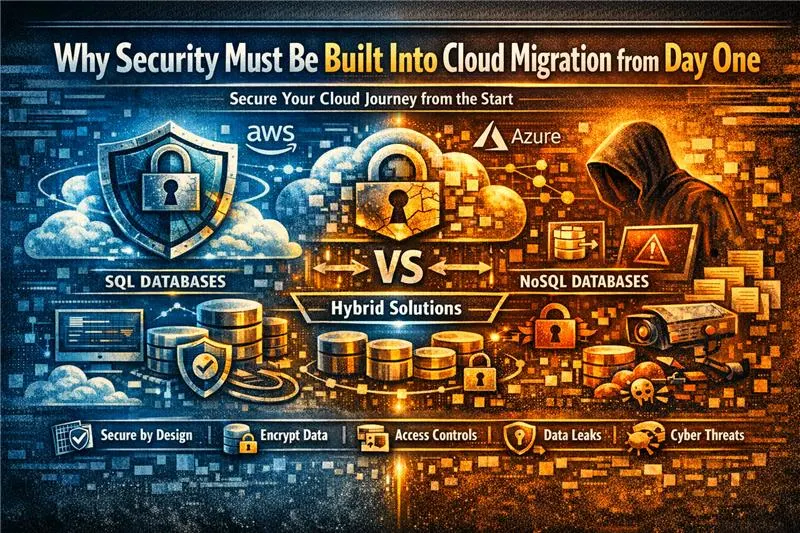
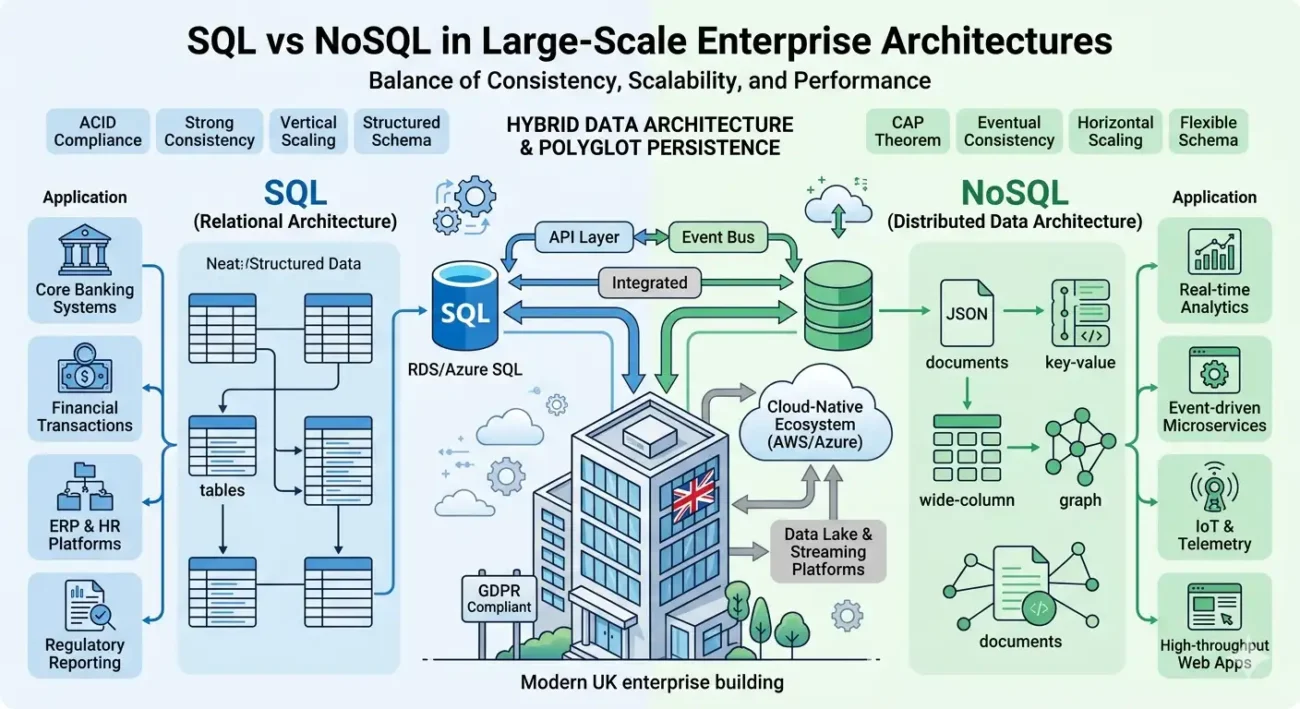
Cloud migration has become a core part of how organisations modernise their IT infrastructure. Whether moving workloads to AWS, Microsoft Azure, or a hybrid cloud environment, the goal is usually the same: improve scalability, reduce operational overhead, and enable faster digital delivery.
However, one of the most common and costly mistakes in cloud migration projects is treating security as something that can be “added later”.
In reality, security cannot be an afterthought in cloud migration. It must be embedded from the very first design decision.
Security gaps often appear during migration, not after
Many organisations assume that moving to the cloud automatically improves security. While cloud providers do offer strong native security capabilities, they do not guarantee secure configurations.
During migration, systems are often in a transitional state. Data is moving, access is being redefined, and services are being re-architected. This is one of the most vulnerable phases of any infrastructure change.
Common issues that arise include:
- Misconfigured identity and access management (IAM) roles
- Publicly exposed storage or databases
- Inconsistent encryption standards during data transfer
- Over-permissive network access rules
- Limited visibility across migrating workloads
These risks are not caused by the cloud itself, but by how the migration is designed and executed.
Why security must be part of the architecture, not a layer on top
A proper cloud platform migration is not just a lift-and-shift exercise. It involves redesigning how systems communicate, how data flows, and how access is controlled.
Security must therefore be built into each architectural decision, including:
- How identity and authentication will work across environments
- How data will be protected at rest and in transit
- How networks will be segmented and controlled
- How logging and monitoring will capture security events
- How compliance requirements will be maintained continuously
If these decisions are delayed until after migration, organisations often end up retrofitting security controls into systems that were not designed to support them.
This creates complexity, cost, and long-term technical debt.
The importance of a secure cloud transition
A secure cloud transition is a structured migration approach where security is enforced at every stage, not just at the end.
This typically includes:
- Assessing existing security posture before migration begins
- Identifying vulnerabilities in legacy systems and configurations
- Designing secure cloud architectures before workloads are moved
- Encrypting data during migration and in the target environment
- Implementing strict access controls during transition phases
- Validating security and compliance after migration is complete
This approach reduces exposure during migration and ensures that security remains consistent across both legacy and cloud environments.
AWS and Azure security must be actively configured
Cloud platforms such as AWS and Microsoft Azure provide powerful security tools, but they require careful configuration to be effective.
In AWS environments, this includes proper design of IAM policies, secure configuration of storage services, network segmentation using VPCs, and enabling audit logging.
In Azure environments, key considerations include Active Directory integration, role-based access control, network security groups, and secure key management.
Without a structured security design, even well-architected cloud environments can become vulnerable due to misconfiguration.
Why security-first migration reduces long-term risk
When security is integrated from the beginning of a migration project, organisations benefit in several ways.
Issues are identified earlier, before they become embedded in production systems. Compliance with regulations such as GDPR becomes easier to maintain. Operational risk is reduced because systems are designed with governance in mind. And remediation costs after migration are significantly lower.
Most importantly, a security-first approach ensures that cloud environments are resilient by design, rather than corrected after deployment.
Conclusion
Cloud migration is no longer just a technical exercise—it is a full transformation of how IT systems are designed and operated.
In this context, security cannot be treated as a separate phase or final step. It must be built into the architecture from day one, alongside performance, scalability, and reliability.
Organisations that adopt this approach are better positioned to operate securely, scale efficiently, and reduce risk in increasingly complex cloud environments.